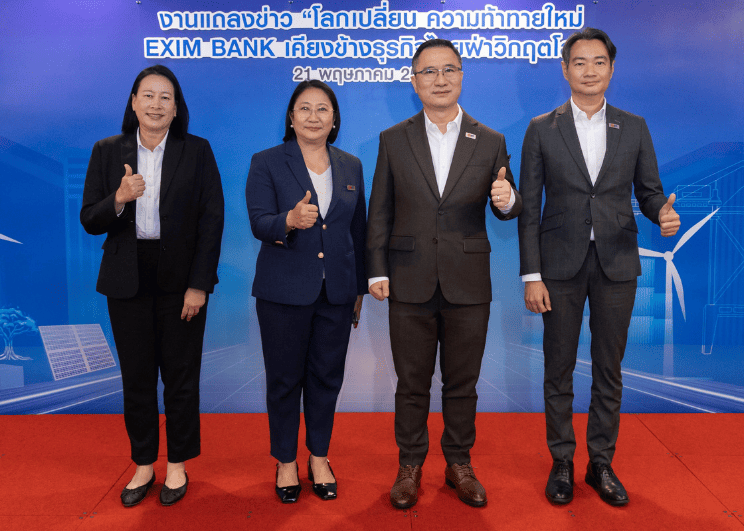























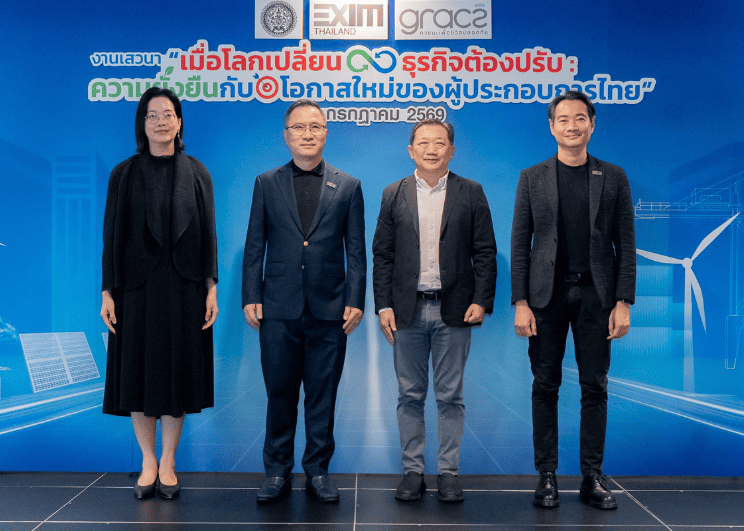
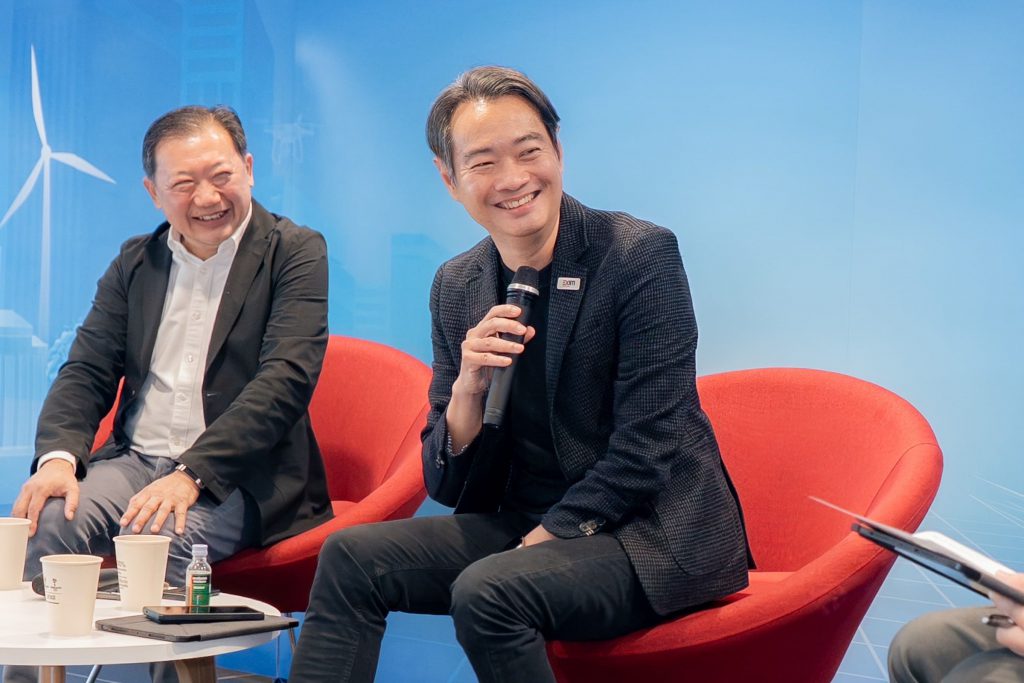
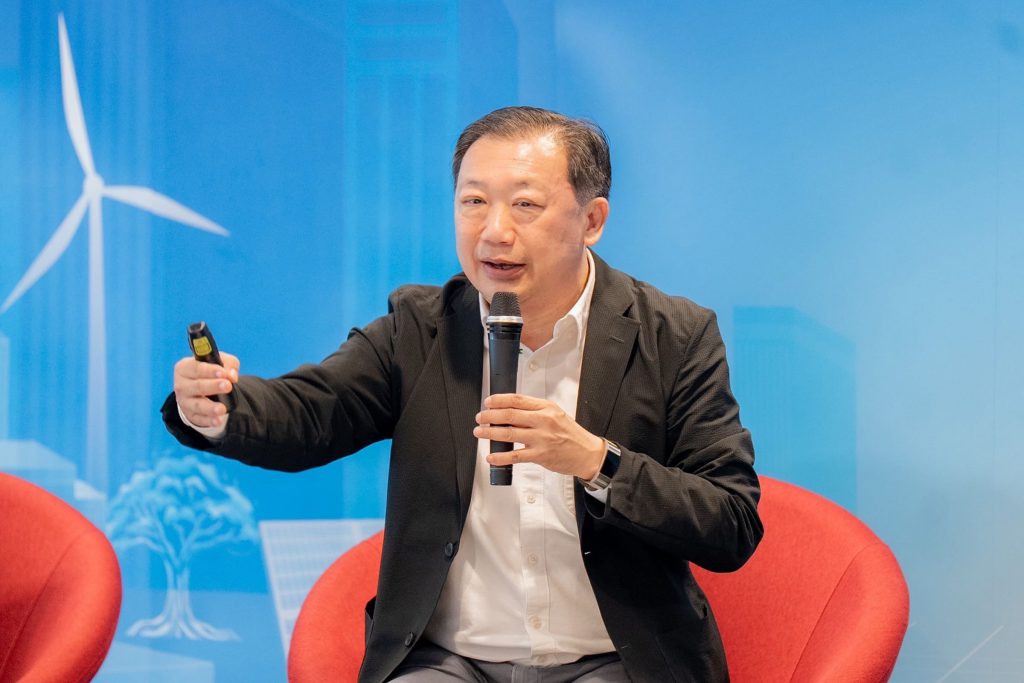
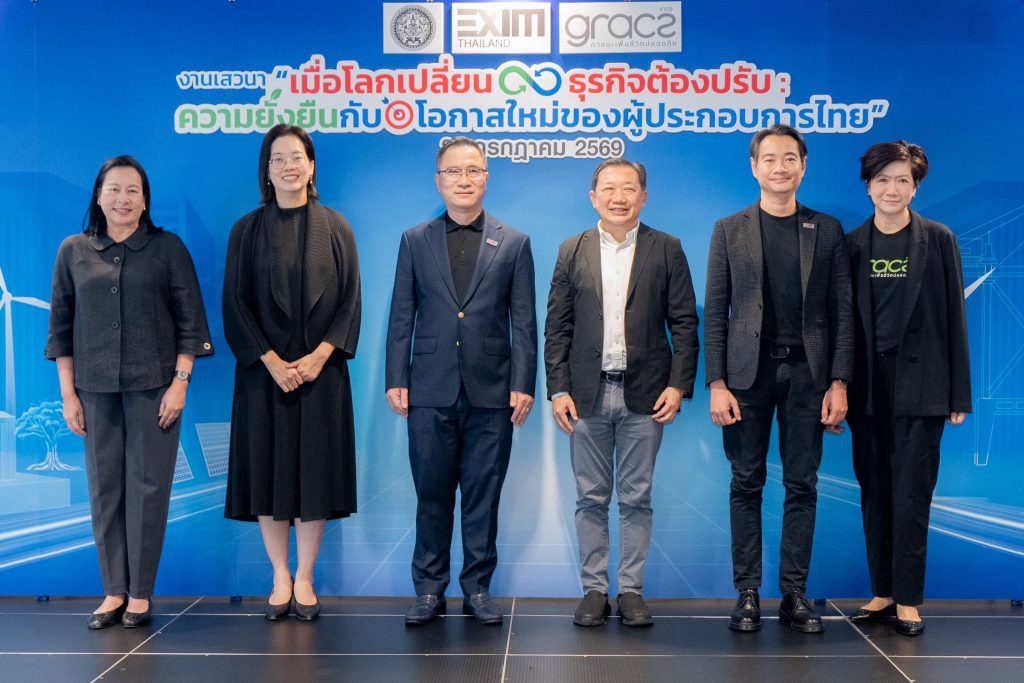
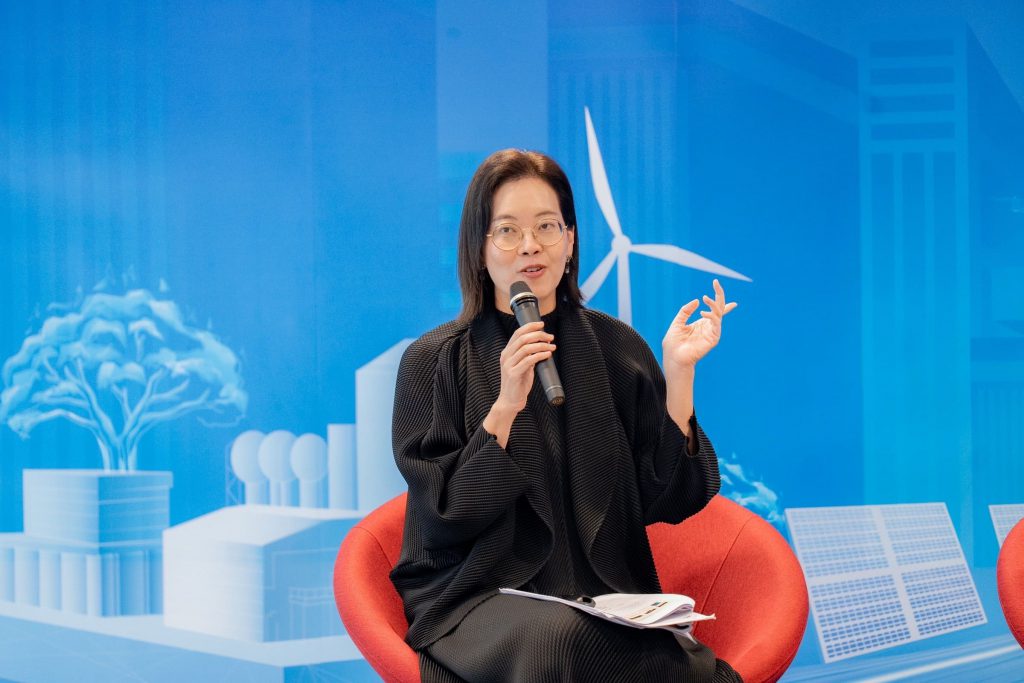
Export-Import Bank of Thailand (EXIM Thailand) is advancing its sustainable finance products and services to support Thai entrepreneurs, particularly SMEs, in adapting to the evolving global trade landscape where environmental, social, and governance (ESG) considerations are becoming increasingly important. As part of this effort, EXIM Thailand hosted a seminar entitled “Business in a Changing World: Sustainability and New Opportunities for Thai Entrepreneurs” to raise awareness of environmental trade measures and encourage businesses to prepare for sustainable growth. The seminar was opened by Mr. Charat Rattanaboonniti, President of EXIM Thailand, with distinguished speakers including Dr. Weerachat Kittirattanapaiboon, Chief Executive Officer of Biodegradable Packaging for Environment Public Company Limited; Ms. Woramon Sinsuwan, Director of the European Union Division, Department of European Affairs, Ministry of Foreign Affairs; and Mr. Ittipol Lertsakthanakul, Senior Executive Vice President of EXIM Thailand, at EXIM Thailand’s Head Office on July 22, 2026.
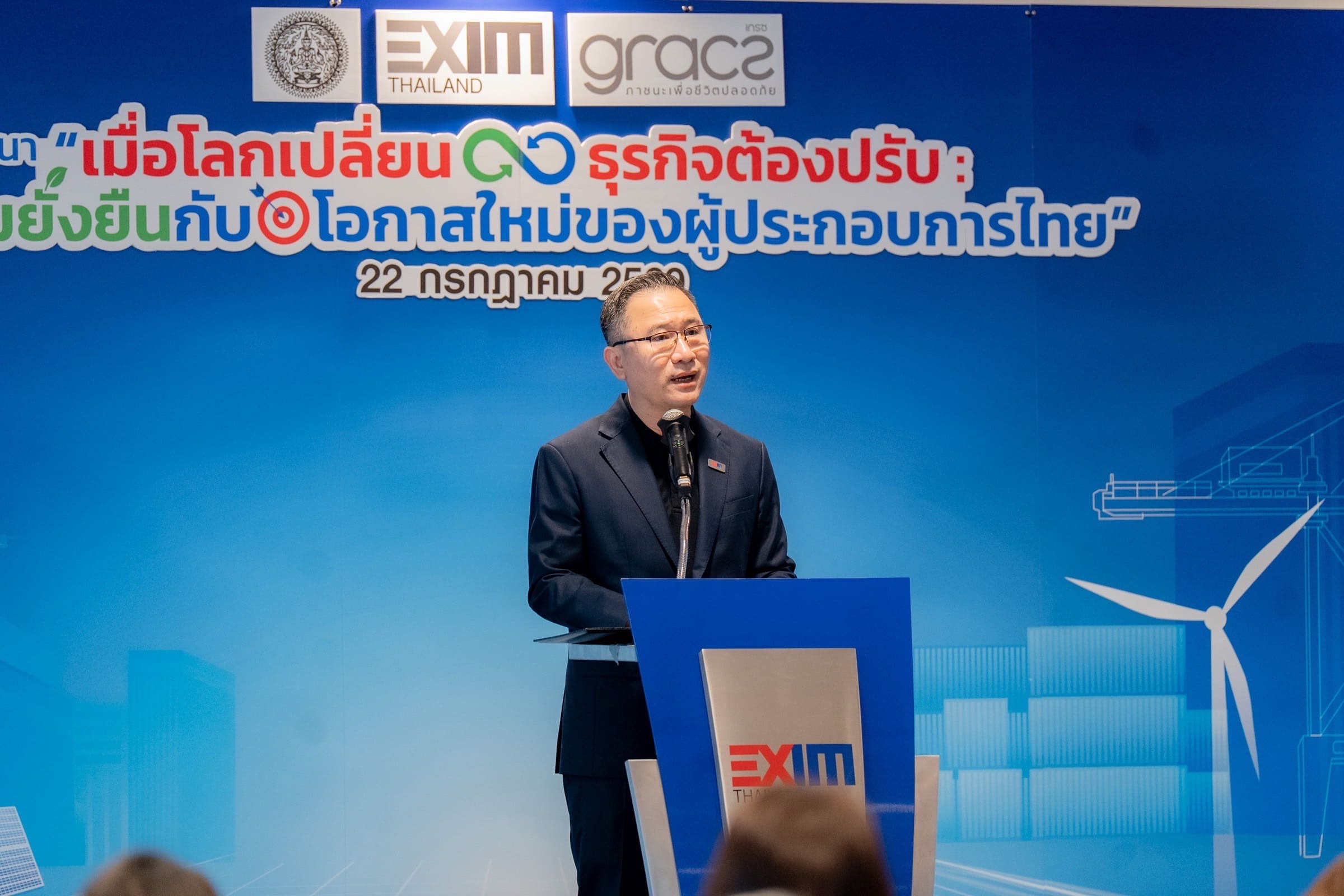
Mr. Charat stated that Thailand’s three major trading partners, the United States, China, and the European Union (EU), which together account for more than 40% of Thailand’s total export value, are continuously introducing stricter environmental and sustainability regulations. In particular, the EU has been implementing the European Green Deal, under which more than 3,400 environmental measures have been introduced. These include the Packaging and Packaging Waste Regulation (PPWR), which will become operational on August 12, 2026; the Carbon Border Adjustment Mechanism (CBAM), which is expected to expand beyond its current coverage of iron, steel, aluminum, cement, fertilizers, electricity, and hydrogen to additional product categories; the EU Deforestation Regulation (EUDR), which prohibits imports and exports of agricultural products linked to deforested land; and the Corporate Sustainability Reporting Directive (CSRD), requiring businesses to disclose sustainability information in a systematic, transparent, and verifiable manner. Meanwhile, the United States has advanced the PROVE IT Act and is considering the Foreign Pollution Fee Act, which would impose fees on imported products with higher carbon intensity than comparable U.S. products. China has also introduced the China Sustainability Disclosure Standards (CSDS) to enhance ESG reporting in line with international standards.
“Growing environmental regulations are reshaping global trade. Businesses must adapt by redesigning products and packaging, selecting sustainable raw materials, improving energy management, collecting and disclosing ESG data, and establishing traceability systems throughout their supply chains. Nevertheless, these challenges also present significant opportunities for Thai entrepreneurs who can adapt quickly. Reliable, transparent, and verifiable sustainability data will strengthen business credibility, create new trade opportunities, and improve access to green finance,” said Mr. Charat.
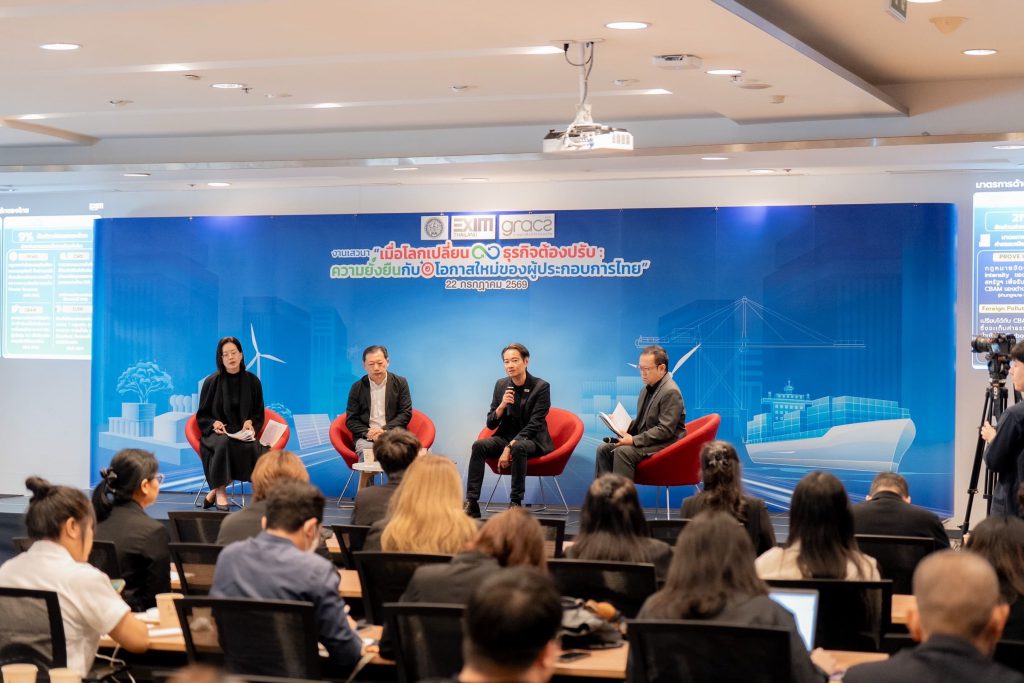
To help Thai entrepreneurs effectively respond to the new global trade rules, EXIM Thailand, as Thailand’s Sustainable Development Bank, is preparing to introduce sustainability data and reporting support services for SMEs and exporting customers. The initiative aims to help businesses prepare ESG information required by importers and global supply chain partners, reduce the risk of losing business opportunities, strengthen their ability to expand into international markets, and establish a solid foundation for accessing green finance and transition finance for a low-carbon economy.
In addition, EXIM Thailand is accelerating collaboration with strategic partners to provide businesses with knowledge, financial support, and assistance mechanisms, enabling them to access these services at reasonable costs. Currently, EXIM Thailand offers financial products to support businesses of all sizes in their transition toward greener operations through loans with interest rates starting from 2.75% per annum for the first two years, with financing of up to 100 million Baht for SMEs and repayment periods of up to 10 years. The two flagship products are EXIM Solar D-Carbon, which supports investment in solar power generation systems and energy storage systems, and Green X Transformation, which finances investments in energy efficiency improvements, technology upgrades, and the adoption of electric vehicles in business operations. These financing solutions help businesses reduce costs, enhance operational efficiency, and strengthen their competitiveness.
EXIM Thailand also provides revolving credit facilities at special interest rates for exporters and businesses within the export value chain that operate with environmental responsibility. Furthermore, businesses applying for Energy Transition and Sustainability Loans or revolving credit facilities by July 2026 will receive an additional interest rate discount of 0.25% per annum for up to one year.
Beyond financial support, EXIM Thailand also promotes greenhouse gas emissions reduction by assisting businesses that install solar power generation systems in registering carbon credits under EXIM Thailand’s Program-based Thailand Voluntary Emission Reduction Program (T-VER). The Bank also collaborates with the Stock Exchange of Thailand to promote the SET Carbon platform under the EXIM Know Your Carbon initiative, enabling businesses to prepare organizational greenhouse gas emissions reports. Businesses that obtain financing from EXIM Thailand and complete emissions reporting through the platform are eligible for an interest rate discount of up to 0.25% per annum throughout the loan term.
“EXIM Thailand believes that strengthening ESG capabilities among Thai entrepreneurs will be a key factor in maintaining the competitiveness of Thailand’s export sector amid rapidly evolving global trade rules. It will also serve as an important mechanism for driving the Thai economy toward stable and sustainable growth,” Mr. Charat concluded.